



Signs you were lent money you couldn't afford
What counts as irresponsible lending?
UK lenders have a legal duty to check that you can actually afford to repay the credit they offer you. That applies to loans, credit cards, overdrafts, catalogue accounts, and payday or short-term lending.
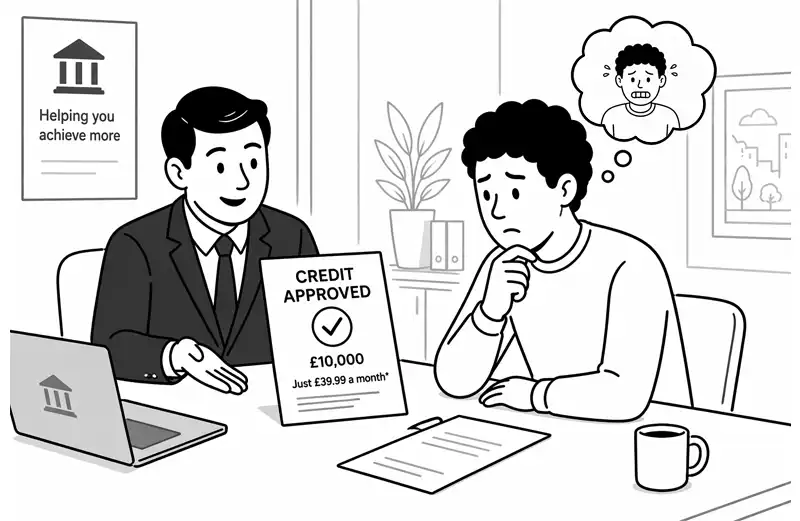
When they skip that check — or run a check so shallow it misses obvious problems — and lend anyway, it is known as irresponsible lending. If you then struggled to repay, paid fees and interest you shouldn't have been exposed to, or ended up taking on more credit to cover the first loan, you may be owed a refund.
What the rules say
The FCA's CONC sourcebook requires lenders to carry out a "reasonable and proportionate" affordability assessment before extending credit or increasing a credit limit. That usually means considering your income, essential outgoings, existing debts, and any signs of financial difficulty.
Crucially, the assessment has to be meaningful. A lender who asked you to self-declare a number, ignored obvious bank-statement warning signs, or repeatedly increased your limit without rechecking your circumstances has not met the standard.
Common warning signs
You may have been a victim of irresponsible lending if any of the following applied at the time you took out the credit:
- You were already missing payments on other debts
- You were using payday loans or credit cards to cover essentials
- Your credit limit was increased without you asking, or despite being maxed out
- You were rolling over or re-borrowing against the same lender repeatedly
- Your income was low or unstable and you were lent a large sum
- You were in a gambling cycle visible from your bank statements
If the lender could have seen these signs and lent anyway, that is the problem the rules are designed to catch.
What can you claim back?
A successful irresponsible lending complaint typically results in a refund of:
- All interest and charges paid on the unaffordable borrowing
- 8% statutory interest on those amounts
- Removal of negative markers from your credit file for the affected debt
The capital you borrowed is usually not refunded — you had the benefit of the money. But stripping out the interest and charges can turn a debt you still owe into one that is paid off, or even flip the balance in your favour.
How far back can you claim?
There is no strict cut-off, but the Financial Ombudsman Service generally expects complaints within six years of the lending (or three years from when you realised it was unaffordable). Even older cases sometimes succeed where the evidence is strong.
What should you do?
Start by making a complaint directly to the lender. If they reject it or offer less than you think is fair, escalate to the Financial Ombudsman Service — they handle irresponsible lending complaints for free.
If the case is more complex (multiple loans, legacy lenders that no longer exist, or large sums), a specialist can often identify angles that are easy to miss on your own.